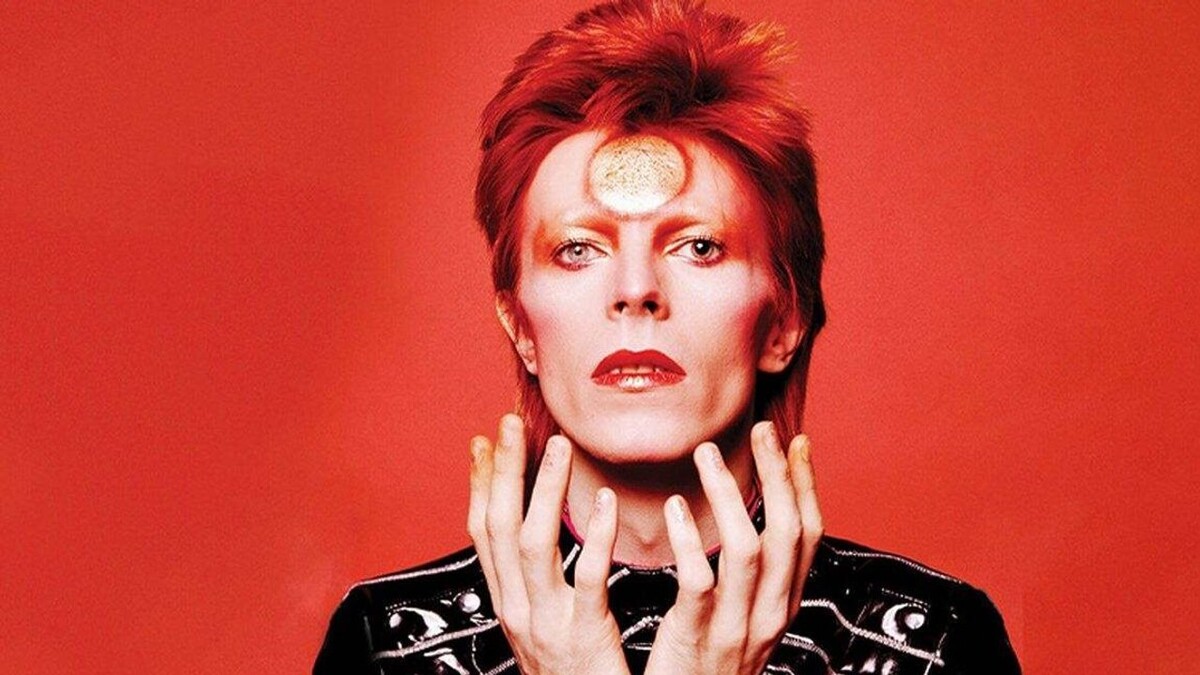
Ten years after his death, David Bowie remains an elusive figure defying any closed definition. Far from settling down, Bowie risked it again in the nineties, exploring industrial rock, electronic music, and digital art, often against market expectations. Already in the 21st century, his figure became even more elusive. After a health problem in 2004, he withdrew almost completely from public life. During this period, Bowie also became a creative catalyst for other artists, producing key albums by Lou Reed and Iggy Pop and absorbing influences from German electronics and contemporary art. Bowie knew how to move like few others in that ambiguous frontier between the avant-garde and mass success: he brought ideas born in the underground to the center of popular culture without losing artistic density or aesthetic ambition. From his first steps in 1960s London, Bowie showed a clear will to transcend. But Bowie did not settle for that place; as soon as he achieved success, he decided to mutate. The creation of Ziggy Stardust, the androgynous alien who came to Earth to become a rock star, marked one of the foundational moments of modern pop culture. With 'The Rise and Fall of Ziggy Stardust and the Spiders from Mars' (1972), Bowie not only consolidated his fame but also proposed a new relationship between music, identity, and stage performance. Bowie did not leave a fixed image to venerate, but a method. Ziggy was a phenomenon in the United Kingdom and a cult hit in the United States, opening a path that Bowie quickly dynamited to start over again. During the seventies, his production was as intense as it was diverse: from glam to the white soul of 'Young Americans', from the elegant darkness of 'Station to Station' to the experimentalism of the Berlin trilogy with Brian Eno (Low, Heroes, and Lodger). Icon of rock, conceptual artist, actor, performer, and pop thinker, his career was an incessant succession of transformations that overflowed genres, styles, and eras. The unexpected return came in 2013 with 'The Next Day', an album that dialogued with his history without falling into nostalgia. But the definitive gesture was 'Blackstar', published on January 8, 2016, his birthday. Conceived as a farewell work, the album transformed illness and death into artistic material, in a final act of lucidity and creative control. Two days after its release, David Bowie died. Ten years later, his legacy continues to expand not only in reissues, archives, and tributes, but in the persistence of his central idea: art as constant transformation. Before finding his definitive voice, he tried British blues, mod rock, and baroque pop, always with his sights set on the Top 40. The turning point came in 1969 with 'Space Oddity', a song traversed by the space race and the technological anxiety of the time, which made him a recognizable figure in the United Kingdom and, a few years later, in the United States. Berlin was also a physical and symbolic refuge: there he distanced himself from excess and reconfigured his artistic language. The eighties found him turned into a global superstar. 'Let’s Dance' (1983), produced by Nile Rodgers, took him to the heart of MTV culture with a calculated elegance that guaranteed him his greatest commercial success. Rock could be fiction, performance, and sexual ambiguity in a single gesture. However, that consecration also opened an irregular stage, marked by erratic decisions and a tense relationship with his own past. In times of rigid identities and repeated formulas, his work continues to remind us that changing, even until the end, can be the most profound form of fidelity to oneself.